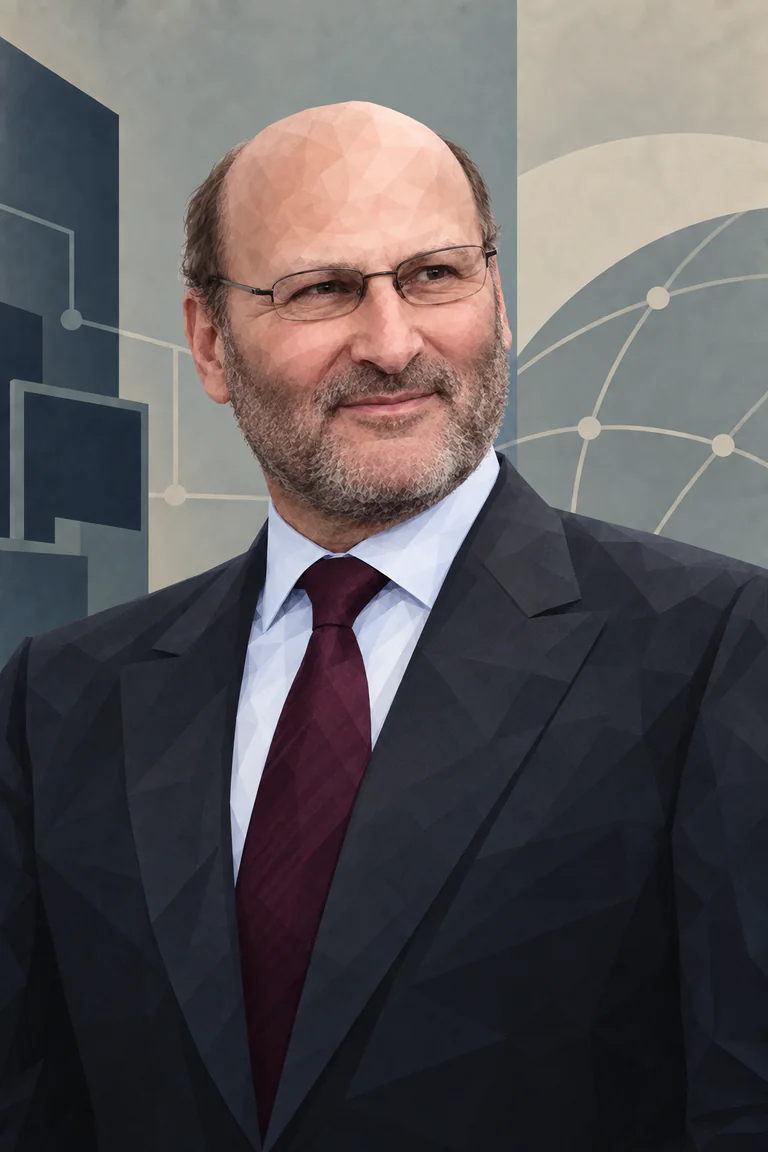
Dieter Schwarz inherited a family retail business from his father but transformed it through Lidl and Kaufland into one of Europe's largest retail groups, creating most of the enterprise's present scale under his leadership. [1][2]
An inherited family business provided the starting platform
Forbes reports that Dieter Schwarz inherited the business from his father Josef, who had become a partner in the fruit wholesaler Suedfruechte Grosshandel Lidl & Co. in 1930. The family company therefore gave Schwarz a meaningful operating base before the modern retail empire was built. [1]
Schwarz opened the first Lidl store in 1973 and became chief executive after his father died in 1977. Forbes credits him with building Schwarz Group into a vast European retail business, showing that the inherited platform changed dramatically under his leadership. [1]
Schwarz Group says its companies now operate about 14,500 stores with roughly 604,000 employees and generated 185.6 billion euros of sales volume in fiscal 2025. Lidl and Kaufland form the retail core, supported by production, recycling and digital businesses. [2]
The modern retail empire was built after the succession
The scale of today's group is far removed from the fruit-wholesale business in which Schwarz's father held an interest. Opening Lidl, taking control after the succession and expanding multiple retail formats were central operating steps in creating the enterprise that now supports his fortune. [1][2]
The reviewed evidence therefore supports material expansion of an inherited business rather than a wholly self-created fortune. Schwarz benefited from a family operating platform, but he created a much larger retail system from that starting base. [1][2]
Sources for background
Sources reviewed Sep 21, 2026.
- Dieter Schwarz · Forbes · Mar 10, 2026
- Who We Are · Schwarz Group
Comparable Fashion & Retail billionaires
Similar Fashion & Retail billionaires by estimated net worth.
%20(cropped).jpg?width=512)